Subscribe to Feed            Add to your Favourites

“It suddenly struck me that that tiny pea, pretty and blue, was the Earth. I put up my thumb and shut one eye, and my thumb blotted out the planet Earth. I didn't feel like a giant. I felt very, very small.” – Neil Armstrong (1930-2012)

Fresh Reads from the Science 'o sphere!

Showing posts with label 2ndbest. Show all posts

Friday, December 11, 2009

Norwegian Blue, Beautiful Plume, Innit?

Something weird and beautiful appeared over the skies of Norway in the morning of December 9th...


It's a UFO!

It's a transdimensional portal!

It's a SIGN FROM GOD ABOUT OBAMA'S PEACE PRIZE!


Heh, not a UFO anymore, it isn't.

More like the failed third stage of a Russian test missile.

Failure can be spectacular!


Pipette tip to Bad Astronomy.

Would you like to know more?
- Spirals Sighted Over Norway as Bulava Fails (The Moscow Times)
- It's not a UFO, just an intercontinental missile blowing up (Times Online)

Saturday, October 17, 2009

More, More, Not Enough, Still Not Enough

If you like the webcomic "Cyanide and Happiness", you may like their latest short video:


As some guy once said: "Success is a menace. It fools smart people into thinking that they can't lose."

Some William guy.

Monday, June 09, 2008

Benefits Of Failure, Importance Of Imagination

Novelist J.K. Rowling, author of the best-selling "Harry Potter" series, gave this entertaining and powerful commencement address at Harvard University a few days ago.


Not a fan of the fantasy genre myself (prefer spacey stuff), but Rowling's speech is a measured retrospective of personal setbacks and triumphs that is a refreshing departure from the usual "reach for the skies tiger!" kind of crap that passes as motivational talks nowadays.

My favourite part is:

So why do I talk about the benefits of failure? Simply because failure meant a stripping away of the inessential. I stopped pretending to myself that I was anything other than what I was, and began to direct all my energy into finishing the only work that mattered to me.

Had I really succeeded at anything else, I might never have found the determination to succeed in the one arena I believed I truly belonged. I was set free, because my greatest fear had already been realised, and I was still alive, and I still had a daughter whom I adored, and I had an old typewriter and a big idea. And so rock bottom became the solid foundation on which I rebuilt my life.


Nice.

Pipette tip to BackStage.

Would you like to know more?
-
Complete transcript and video (Harvard Magazine)

Saturday, May 17, 2008

John Stewart Bell: The Part-timer Who Proved Einstein Wrong

A letter written by Albert Einstein in 1954 has recently emerged and clearly indicates that he was not a supporter of religious beliefs.

Einstein is without a doubt one of the most brilliant physicists who ever lived, but his views on religion has always attracted controversy due to his (deliberately?) unclear stand.

Of course, as Prof. Larry Moran of Sandwalk observes correctly, what Einstein personally believed is not relevant to whether supernatural beings exist or not.

Besides, it's not as if Einstein was right about everything.

Einstein's strong "brand name" has given the public an impression that he couldn't possibly be mistaken about anything, but that is simply not true.

For example, in 1939 Einstein and Leó Szilárd co-wrote a letter to US President Franklin Delano Roosevelt - a letter that helped to spark off the nuclear arms race.

After realizing the magnitude of the horror that atom bombs unleashed in Hiroshima and Nagasaki, Einstein would spend his later years strongly opposed to nuclear weapons.

Just before he died, he revealed to Linus Pauling that:

I made one great mistake when I signed the letter to President Roosevelt recommending that atom bombs be made.

Albert Einstein is definitely a human being, with human desires and weaknesses.

Not everything that Einstein says outside of theoretical physics must be true.

In fact, not everything that Einstein says inside of theoretical physics must be true!

Fresh Brainz readers, you're in for a treat - this week's science story is both about counterintuitive science AND the second-best.

An amazing story about how a young man REFUTED one of the greatest minds in history (as a hobby!) ...

... and nobody cared.

Because the public didn't understand the significance of what he did.

To begin the story, let's turn the clock back to 1935.

Einstein, who recently achieved great success with his discovery of the photoelectric effect and the theory of relativity, has moved on to other interesting questions in physics.

He was embroiled in a long-standing dispute with a group of physicists (known as the Copenhagen theorists, most notably Niels Bohr) over the implications of the predictions generated by the brand new theory of "quantum electrodynamics".

Or quantum theory, for short.

Quantum theory predicts a bizarre phenomenon called quantum entanglement, where measurements performed on parts of a quantum system that are widely separated from each other can somehow have instantaneous influence on one another.

From the perspective of Einstein's theory of relativity, particle interactions cannot propagate faster than the speed of light, and thus two spatially separated particles can never affect each other instantaneously.

Therefore, Einstein considered the concept of quantum entanglement counterintuitive and unbelievable, coining the term "spooky action at a distance" to describe its absurdity.

Rather odd that an originator of one counterintuitive theory could find another counterintuitive theory so utterly unacceptable, but like I said, Einstein is human.

Together with Boris Podolsky and Nathan Rosen, Einstein published a paper in 1935, introducing a thought experiment called the "EPR paradox" that highlights the apparent weaknesses of quantum theory, including the concept of quantum entanglement.

Einstein himself said that:

Quantum mechanics is certainly imposing. But an inner voice tells me that it is not yet the real thing. The theory says a lot, but does not really bring us any closer to the secret of the 'old one'. I, at any rate, am convinced that He does not throw dice.

They concluded that quantum theory is an incomplete theory and postulated that "hidden variables" may be responsible for the observed results.

Einstein would maintain this position for the rest of his life, and the controversy would not be resolved until after his death.

Enter John Stewart Bell, a brilliant Irish physicist.

He was only seven years old when the EPR paradox was published.

In his early 20s, Bell became fascinated by this scientific controversy. In the beginning, he was a strong supporter of Einstein's view, stating that:

I felt that Einstein's intellectual superiority over Bohr, in this instance, was enormous; a vast gulf between the man who saw clearly what was needed, and the obscurantist.

A bizarre twist lay in the future.

By the 1960's, Bell's day job was working as a particle physicist and accelerator designer at CERN. However, his part-time obsession was quantum theory, especially with the "hidden variables" mentioned in the EPR paradox.

In 1963, Bell took a year's leave from CERN and was able to spend significantly more time on his pet obsession. He focused on working out a way to experimentally test the existence of these hidden variables.

Finally, he published Bell's Inequality (or Bell's Theorem) in 1964. Bell's inequality makes it possible to construct experiments to directly test if "spooky action in a distance" actually occurs.

Other physicists began to perform experiments based on his hypothesis. After numerous experiments using many different approaches, the result is clear.

Quantum entanglement is real.

There is no need to postulate any hidden variables to account for the results.

John Bell had single-handedly disproved the great Albert Einstein.

The parallels could not be more obvious - just as Einstein had once rendered the "luminiferous aether" irrelevant using the theory of relativity, so Bell has also rendered Einstein's "hidden variables" irrelevant using Bell's inequality.

Bell's inequality was hailed by fellow physicists as the "most profound discovery in science". In the late 1980s, Bell was even nominated for a Nobel Prize.

Unfortunately, Bell would never enjoy anywhere near the amount of fame and prestige that Einstein received.

On the 1st of October 1990, John Bell died suddenly of a stroke.

Had he lived longer, he would most likely have been awarded the Physics prize, and things might have turned out very differently.

Alas, because theoretical physics was inaccessible to the public at that time, most people never came to understand the importance of his work.

And so John Stewart Bell, the part-timer who proved Einstein wrong, was consigned to the footnotes of history.


Would you like to know more?

About John Stewart Bell:
-
John Bell and the most profound discovery of science

About other stories of the second best:
-
Swiss vs British Everest teams
-
Steve Jobs vs Bill Gates
-
Golgi vs Cajal
-
Wallace vs Darwin

Monday, September 03, 2007

Alfred Russel Wallace: A Scientist And A Spiritualist

In this fourth installment of our continuing series on stories of the second best, Fresh Brainz turns to the life and work of Alfred Russel Wallace - a great scientist who never became legend.


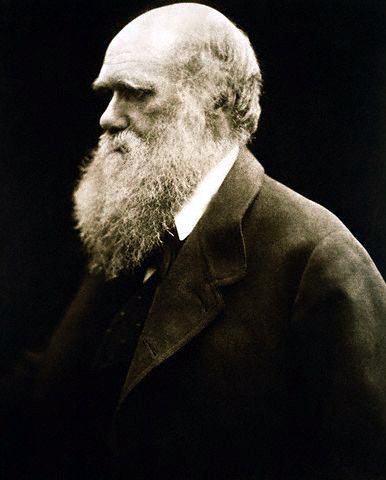
Wallace (left photo) is the co-discoverer of natural selection, a crucial mechanism for biological evolution.

In fact, he almost scooped Charles Darwin (right photo) when he formulated his ideas about natural selection in June 1858 while suffering from malaria in a tropical island (in modern-day Indonesia). He sent his essay entitled On the Tendency of Varieties to Depart Indefinitely From the Original Type to Darwin, who was shocked to see that Wallace's ideas were so similar to his own.

Darwin had spent nearly 20 years working on his idea, and his dream was about to be dashed!

This could have a sparked off a fierce academic rivalry, but to the credit of both scientists, the situation was amicably resolved.

Wallace realized that Darwin was a much more prominent biologist and had developed the natural selection hypothesis much further. Thus, he sought to cooperate, rather than to compete with him. Darwin reciprocated in collegial spirit (years later he would also help get Wallace out of financial difficulty by lobbying for a government pension).

They agreed to announce their discovery jointly Darwin decided that their discovery would be announced at the Linnean Society meeting on the first of July.

Their papers were read by the secretary of the meeting, since both Wallace (who was in present-day Kalimantan) and Darwin (who was attending the funeral of his son) were unable to attend.

The papers made very little impact at that time.

Undeterred, Darwin rushed to complete his On the Origin of Species by Means of Natural Selection, which was finally published in November 1859. The book was so popular that it quickly sold out.

The rest is history, and Wallace would never rise above the shadow of Darwin.

But Wallace did not merely spark off the revolution in evolution - he had his own distinct ideas about natural selection.

For example, he emphasized adaptation to the ecological environment as the main driving force of natural selection, whereas Darwin focused more on intra-species competition.

Wallace also proposed a role of natural selection as a feedback mechanism for keeping organisms adapted to their environment. Today we call this process "purifying selection" - Darwin himself did not appreciate the stabilizing effect that natural selection can have on populations.

In addition, Wallace discovered a way in which natural selection can lead to reproductive isolation. He predicted that hybrid offspring of two varieties that have diverged far from the parental species would have poorer adaptive fitness, thus allowing natural selection to drive them further apart - resulting in a split into two new species. This is called the Wallace Effect.

Despite his many contributions to evolutionary biology, few biologists today are willing to call themselves "Wallacean (or Wallacian?) evolutionists".

Why?

There are two main reasons:

Firstly, Wallace's version of evolution contained some errors.

He downplayed the role of sexual selection, an important aspect of natural selection. He also did not consider the possibility of neutral evolution (from today's perspective he would be a pan-adaptationist).

But more importantly, Wallace did not believe that natural selection applied to the human mind and consciousness. He was a theistic evolutionist who believed that an unseen Spirit had intervened in the course of evolution to produce the human mind.

Another reason is that Wallace's reputation as a scientist gradually declined from the 1860's onwards, as he became more and more attracted to spiritualism.

He wasn't a fan of organized religion.

But he liked phrenology, experimented with hypnosis and was convinced that some of the phenomena experienced during séances were real. He believed it so much that he was willing to defend spiritualist mediums against allegations of fraud, severely undermining his own reputation.

He also became a strong opponent of vaccination, a new medical technique at that time which would later save millions of lives from infectious diseases such as smallpox.

Wallace was convinced that the benefits claimed by vaccination proponents were simply results of better hygiene. He believed that these people were protecting their own vested interests. He even produced questionable statistics while trying to support his anti-vaccination stand during a Royal Commission investigation.

This sort of behaviour alienated Wallace from his scientific colleagues and he quickly faded into obscurity after his death.

Even today, his historic legacy to modern science continues to be controversial.

Still, Fresh Brainz is always happy to root for the underdog.

Wallace was not only a superb scientist, but he also has direct links with Singapore (unlike Albert Einstein), visiting our island numerous times to collect beetles and other insect specimens.

He certainly deserves to be better known and more widely read - which is why Fresh Brainz is so happy to feature his story!

Ok, that's not completely true.

It's his cool glasses that sealed the deal.

Totally geek.


Would you like to know more?

More resources on Wallace
-
The Alfred Russel Wallace Page
-
Rocky Road: Alfred Russel Wallace

Other stories of the second best
-
Swiss vs British Everest teams
-
Steve Jobs vs Bill Gates
-
Golgi vs Cajal

Saturday, December 09, 2006

A Cruel Irony Of Fate

Tomorrow, on the 10th of December, American scientists Dr. Andrew Z. Fire and Dr. Craig C. Mello will be receiving the 2006 Nobel Prize for Physiology and Medicine from the King of Sweden at the Stockholm Concert Hall.

They are sharing the prize because they worked together on the same research project, and discovered from their experiments on the worm Caenorhabditis elegans that specific stretches of double-stranded RNA can inhibit the expression of genes effectively (RNA interference). Their finding was published in the prestigious journal Nature in February 1998.

This important discovery increased our understanding of cellular processes, provided an experimental tool for genetics researchers, and formed the basis of a new generation of medicines which have recently completed phase I clinical trials.

We can imagine the mutual joy and excitement of these two colleagues when they receive the prize.

In stark contrast, exactly one hundred years ago in Stockholm, the 1906 Medicine prize was also shared between a pair of scientists, but the mood could not be more different.

The tension in the air was palpable.

That was the first time that the Nobel prize was shared among two recipients. Dr. Santiago Ramon y Cajal and Dr. Camillo Golgi both won the prize “in recognition of their work on the structure of the nervous system”, but in reality these scientists were rivals of each other who believed in opposing theories.

In the late 19th century, there was a controversy in the emerging field of neuroscience. Some scientists believed that the nervous system consists of cells that are linked together in a diffuse, continuous nerve network. This was called the Reticular Theory. Others believed that the nervous system consists of cells called “neurons” which are physically separated by tiny gaps. This was the Neuron Doctrine.

Golgi had invented a chemical process that only stained a small percentage of the nerve cells, so that fine details can be clearly seen under a microscope. Cajal used Golgi’s stain and further improved it, allowing the nerve cell to be seen in its entirety and used these results to support the neuron doctrine. Golgi, on the other hand, firmly believed in the reticular theory and considered Cajal’s results to be inconclusive.

By 1906, although there was strong experimental evidence from many scientists in favour of the neuron doctrine, the Nobel committee for medicine decided to award both Cajal and Golgi.

When delivering his Nobel lecture, Cajal updated the audience on his latest experimental results and noted that:

True, it would be very convenient and very economical from the point of view of analytical effort if all the nerve centres were made up of a continuous intermediary network between the motor nerves and the sensitive and sensory nerves. Unfortunately, nature seems unaware of our intellectual need for convenience and unity, and very often takes delight in complication and diversity.

Golgi however used his lecture to attack the neuron doctrine. He insisted that:

At this point, while I shall come back to this question later, I must declare that when the neuron theory made, by almost unanimous approval, its triumphant entrance on the scientific scene, I found myself unable to follow the current of opinion, because I was confronted by one concrete anatomical fact; this was the existence of the formation which I have called the diffuse nerve network.

While he respected the older Golgi greatly, Cajal was clearly disappointed at Golgi’s behaviour at the ceremony. He later lamented:

What a cruel irony of fate to pair, like Siamese Twins united by the shoulders, scientific adversaries of such contrasting character!

Sadly, this controversy would not be fully resolved until after the deaths of both illustrious scientists. Direct evidence from electron microscopes in the 1950s finally confirmed the presence of tiny gaps, called synapses. The neuron doctrine is correct – Cajal had laid the foundations of modern neuroscience.

It is easy to dismiss Golgi as a stubborn fool. However, if there can only be a winner in this story, then who is it?

Golgi was no less intelligent, hardworking or productive than Cajal. In addition to his contributions to neuroscience, Golgi had also done important research in many areas such as malaria and histology. In fact, he is better known to most life science students because he discovered the Golgi apparatus in 1898, coincidentally one hundred years before the discovery of RNA interference.

Thus, despite their differences of opinion, Cajal and Golgi embody the same spirit of discovery which is also present in their modern counterparts when they receive their prize tomorrow.

But in a much happier mood, of course.


Would you like to know more?

- about how Golgi shared the 1906 Medicine with Cajal

- about other stories of the second best -
1. Swiss vs British Everest teams
2. Steve Jobs vs Bill Gates

Saturday, September 09, 2006

Steve Jobs vs Bill Gates

In this second story about the second best, I am going to talk about two of the most well-known individuals on planet Earth.

Oooh I can already sense strong feelings from you.

First of all I must stress that I won't go into too many details in this article. Whole books have been written about Steve and Bill.

Second, unlike in my first story, here I don't believe that either of these guys need any more publicity. Best or second best, they both have way more fame and money than anyone should have.

What I intend to do in this essay is to show you how starkly different their personalities and work styles are. And also to examine their success from more of an "environmental" point of view.

Such as the people they knew, and the context they were in.


So how different are they?

1. Steve Jobs is the consummate Uber-Salesman. He is charismatic, expressive, creative and extremely aggressive.

He is superb at understanding the psyche of his customers and appealling to their sense of values to drive sales. In addition, his habit of micromanaging people and obsession with detail is also legendary.

Put up for adoption at birth by his unwed mum, Steve grew up in a working-class environment supported by his adoptive parents. After high school he worked as a summer employee at Hewlett-Packard where he met engineer Steve "Woz" Wozniak. He then attended Reed College, but dropped out after only one semester when he couldn't see the purpose of it.

To search for philosophical enlightenment, he backpacked around India with a college buddy. After he returned to the USA he worked at Atari for a while, but when he saw a computer that Woz had designed for personal use, he convinced Woz to market it. Together, they set up Apple Computer Co. in 1976.


2. Bill Gates on the other hand is the quintessential Super-Geek. He is reserved, technically-inclined, opportunistic and has a more passive-aggressive style.

He is uncomfortable dealing with people, such that some have speculated that he may have Asperger's Syndrome. However, he has deep knowledge of computers and was directly involved in writing software code until 1989. More importantly, he is very clear about his financial goals and has an excellent understanding of how the business world works.

Bill had a more privileged childhood - his father is a lawyer and his family lived in an upper middle-class environment. Even as a kid he was obsessed with computers - he had already started a computer program company with fellow student Paul Allen even before he graduated from high school!

With excellent grades in maths and science, he successfully enrolled into Harvard pre-law, but even there his heart was still in computers. In the meantime, Paul pushed Bill hard with the idea that they should start a software company.

When an opportunity appeared, he left school in the third year to spend more time on his new business of selling software for a kit computer. That company he founded with Paul in 1975 was Micro-Soft (later Microsoft Corp).


3. It is obvious that Bill Gates and Steve Jobs have very different personalities. There are however, interesting parallels. For example, they both started with one business partner each who shared a common vision. To me though, the most important thing they both share is that they positioned themselves at the right time to take advantage of a massive growth surge in personal computing.

Since they both started at the same time, why does 97.5% of the computers in the world run Microsoft Windows? Why does Bill Gates (US$50 billion) have 11.4 times more net worth than Steve Jobs (US$4.4 billion)?


4. There are numerous reasons. At the company level, Apple and Microsoft use different strategies to become the huge corporations they are today.

Apple makes easy to use, high quality, high-tech products for a competitive price. Their focus is on the consumer - fulfilling their needs and creating desire for Apple products.

Microsoft initially used the open architecture of the IBM PC, and the solid reputation of IBM to their advantage. They marketed their operating system to as many IBM PC clone manufacturers as possible and earned money through licensing fees. They achieved market dominance by a series of shrewd business decisions.


5. At the personal level, the work styles of Steve and Bill may also play a role in their comparative success.

Although Steve Jobs has some sort of personality cult surrounding him, people who work with him find him picky, unpredictable and bad tempered. He was so unbearable that he was once dismissed by his own company in 1985.

In contrast, despite widespread public dislike of Bill Gates (comparing him to the Devil), he has remained at the helm of his own company all the way until June this year, when he made the decision to take a backseat and spend more time at his foundation.

Steve's pet peeve are people who don't do what he wants. Bill hates managers who don't think through about their business strategies carefully.

However, they do have some similarity in work style - both are extremely direct and often dismiss other people's ideas as stupid.

Also, Steve may be more creative than Bill, but neither of them are truly original thinkers. In essence they are both prolific copy-cats.

Let me illustrate this with a quote from Folklore.org, when Steve confronted Bill about Windows:

"You're ripping us off!", Steve shouted, raising his voice even higher. "I trusted you, and now you're stealing from us!"

But Bill Gates just stood there coolly, looking Steve directly in the eye, before starting to speak in his squeaky voice.

"Well, Steve, I think there's more than one way of looking at it. I think it's more like we both had this rich neighbor named Xerox and I broke into his house to steal the TV set and found out that you had already stolen it."

You should read the whole story, it's really funny because it's all true.


6. So to sum it up, if achieving market dominance is the measure of success, then Bill Gates is clearly the best.

And Steve Jobs is second best.

Even to Mac lovers, because nobody can beat Woz.


More information:

Jobs vs Gates - A Comparison

Jobs vs Gates: Who's The Star?

PBS - Triumph Of The Nerds!

Movie - Pirates of Silicon Valley

Saturday, August 26, 2006

The Bitter Fight For The Top.

Everyone knows who Edmund Hillary and Tenzing Norgay is. This story is not about them, or the Ninth British Expedition of 1953.

It is about the Swiss teams and how they nearly put the first men on the summit of Mount Everest in 1952. Instead they became the second best.

Not by lack of courage, effort or ingenuity, mind you.

From 1921 to 1952, Everest had been the sole preserve of the British. Eight expeditions were led up this unwelcoming behemoth, where the air is dangerously thin, the terrain painfully rugged and the weather wildy unpredictable.

Their height record then was 8573 metres set by Edward Norton in 1924, and despite the immense efforts of the British, this record would hold for 28 years until the arrival of the Swiss.

In 1952, the Nepalese government finally allowed the Swiss to launch an expedition into Everest. The first Swiss expedition, led by Edouard Wyss-Dunant was also the first to attempt the Western Cwn approach (identified by the British in 1951). They were confronted with a difficult terrain obstacle at Khumbu icefall, but were able to surmount it with effort and ingenuity.

Although not in their initial plan, embolded with their good progress the team decided to send a four man ascent party to climb the summit. This included Raymond Lambert, Tenzing Norgay, Rene Aubert and Leon Flory. Raymond Lambert was a veteran climber with far more mountaineering experience than Edmund Hillary. He was also a good friend of Tenzing Norgay.


By the time they set up camp at 8400 metres, difficulties started to stack up. Short of water, with no sleeping bags and using malfunctioning oxygen sets, Lambert and Norgay struggled up the mountain by sheer grit and reached the height of 8611 metres.

A new world record.

So determined to reach the summit was Lambert that he joined the second Swiss expedition in autumn 1952 for another try. Unfortunately by this time of the year the weather conditions on Everest was so bad that they couldn't even reach their own record height. Low temperatures and strong winds combine to become icy blades of air that forced them to turn back.

The Swiss were defeated and the British were relieved.

News of the Ninth British Expedition loomed large and a resigned Lambert met with British team leader John Hunt to share his experiences. He also encouraged his friend Norgay to join the British team as they had a good chance of reaching the summit.

Then on 29th May 1953, the summit was conquered.

The British team had become the best.

After a few years of intensive planning, the Swiss came back with the larger and better equipped Everest/Lhotse expedition in spring 1956.

This time the weather finally smiled on them.

On 23rd May 1956, Jurg Marmet and Ernst Schmied became the third and fourth men to stand on the summit of Everest.

The Swiss team had become second best.

Book Reference

Gillman, Peter, ed. Everest: Eighty years of triumph and tragedy. London: Little, Brown and Company, 2001.

Friday, August 25, 2006

Stories Of The Second Best.

In Singapore there is a well known social attitude called Kiasu (from Hokkien - Kiah Soo, Chinese - 怕输). It literally means "scared to lose", and it refers an excessively competitive attitude at the expense of basic social graces like courtesy and respect for others.

This is not a behavior unique to Singaporeans, a similar attitude in the West is "keeping up with the Joneses", though in Singapore it is common to hear people brandishing the concept of kiasuism as if it were a matter of national pride.

I don't like either attitude.

But what I especially hate about kiasuism is the fear of being second best. The Western equivalent is "why settle for second best?" Truly kiasu individuals consider the second best to be on par with losers.

First off, I must state that the second best don't usually "settle" to be second best. In terms of skill, effort and persistence, they are often equal (sometimes better!) than the best.

Why aren't they the best then?

Because there is only one "best" position.

You can work your darnest to become super good. But in fiercely competitive fields, you cannot choose to be the best.

It chooses you.

To illustrate the meaning of this, and to highlight their epic struggles, I will be posting a regular feature of stories on the men and women who tried their utmost, but yet were unable to become household names by just a hair's breadth.

I tell their stories because I believe they deserve to be better known.

Stay tuned for the first essay coming your way - The Quest for Mount Everest!